
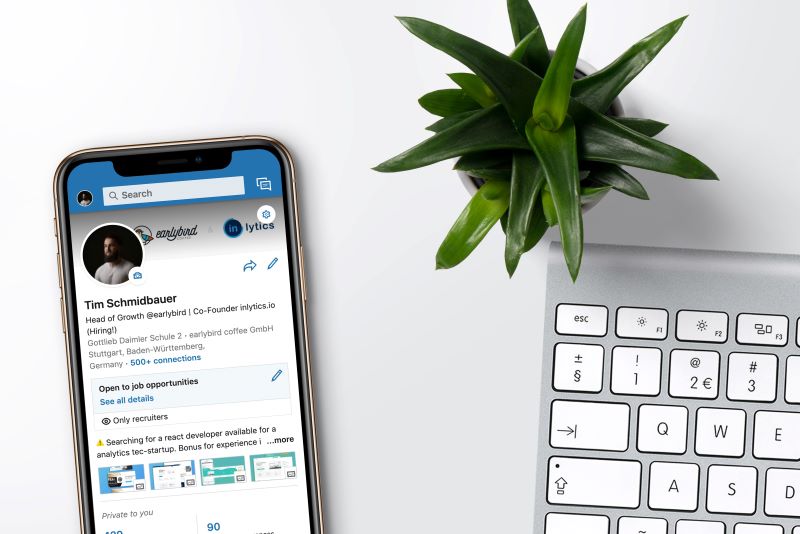
Advertising on LinkedIn can be a great way for B2B companies to reach their target audience. Whilst most companies tend to gravitate towards Google Ads and Facebook Ads as the potential audience is a lot larger, LinkedIn offers a unique way to target businesses and professionals.
Overview of LinkedIn Advertising options and targeting
If you’ve used Google or Facebook Ads before, you’ll notice a lot of the same features are present in LinkedIn advertising too, such as objective-based campaigns where you choose your end goal (brand awareness, engagement, lead generation, etc) and build your campaign to achieve this objective.
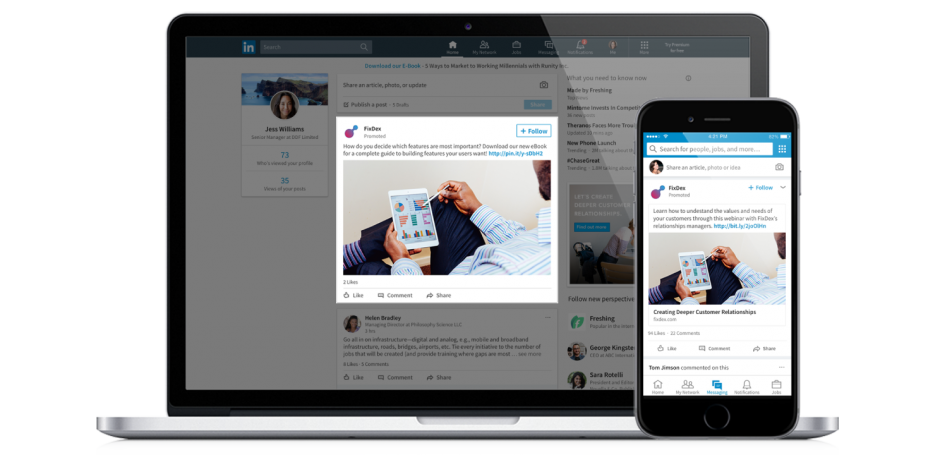
Ads can run as sponsored content (like Facebook’s promoted posts), as sponsored InMail (direct messages), text ads at the top and right hand side of your feed, plus dynamic ads (available to selected advertisers) which pull through personal profile data into the ad itself.
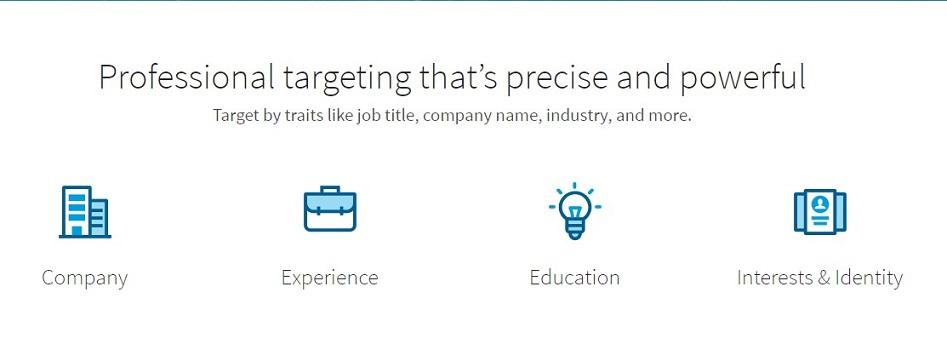
Targeting options make this a real opportunity for those looking to target other businesses with options such as company name, company size, industry, job title and seniority, education level, job experience as well as functions/skills used within their role. You can also target my demographic data such as age and gender. So if you’re a marketing agency looking to target directors of specific companies, or a HR professional looking to target potential candidates for a new role, you can do so with relative ease.
You can also utilise Matched Audiences (like Custom Audiences on Facebook and Google) where you create your audience from people who have visited your website or from a database of opted-in customer email addresses. Matched Audiences allow you to remarket to a warm audience, making your ads more relevant and more likely to generate engagement.
All this sounds great, right?
So why isn’t everyone advertising on LinkedIn?
The major barrier to advertising on LinkedIn is the investment required. Both Google and Facebook gave relatively low minimum spend requirements with Google being one of the cheapest options for pay-per-click advertising, not setting a minimum spend in terms of budget and allowing bids as low as 1p per click. LinkedIn, on the other hand, requires a minimum daily spend of $10 (sometimes more depending on the campaign types and targeting options) and a minimum cost per click (CPC) (or cost per thousand impressions (CPM)) of $2. And remember, these are minimum costs. In order to compete for ad space you may need to budget much higher than this.
This makes LinkedIn one of the more expensive ways of reaching your target audience, but the reach you get should be much more targeted.
Is LinkedIn advertising good for all businesses?
Definitely not.
LinkedIn recommends a minimum audience size of 300,000 (depending on your choice of campaign type), so if you’re targeting a small area, such as local businesses, or have really refined your targeting down to a very specific audience, you may not have enough people to target to generate any meaningful results.
One thing to bear in mind when selecting different targeting options is that LinkedIn assumes they must meet all criteria to be included in your audience. For example, if you select directors in Leeds, educated to degree level where their job function includes sales, LinkedIn will only include those that match all these criteria in your audience. This is great for really specific targeting, but will reduce the number of people in your audience massively.
To summarise…
If your targeting is too niche or too “local” you may not get the results you desire from your campaigns, so LinkedIn advertising may not be for you. LinkedIn Advertising is great for some businesses and may be the answer to reaching your B2B audience in a more targeted way than Google or Facebook. You’ll need to be prepared to set aside a substantial budget to run ads on a regular basis, but if you’re reaching a more targeted audience, you should find you get a better return on investment.