

I have to admit, I’m not the best at embracing change.
I know, I know, I’m in the wrong industry!
But change is the only constant and the world of SEO is certainly no exception. I was first introduced to the concept of Search Engine Optimisation (SEO) back in 2005 (yes, I’m that old!) and it was like someone opening up the door to another world. As a marketing graduate, I thought I knew a thing or two about digital marketing, but back in 2005, SEO was way too niche to be part of the curriculum, so I was excited to be part of this new world and learn new skills. Little did I know that ‘learning new things’ would be an ongoing process over the next 20 years and beyond!
Despite the seemingly ever-changing landscape of SEO, I’ve always argued that nothing fundamentally changes. Sure, we have algorithm updates with winners and losers, but Google rarely makes massive updates to its best practice/webmaster guidelines. Its aim is always to provide the best user experience, provide relevant results and ultimately keep searchers coming back so it can generate income from advertising.
All algorithm updates are essentially ways to improve the search results and weed out those who manipulate rankings with shady SEO practices. If you’ve been optimising your website using best practices, there’s no reason to worry, you should be safe if Google makes a change. You only need to panic if you’ve been doing SEO that isn’t squeaky clean.
But things are changing. Actually changing. AI seems to be changing everything, doesn’t it?
So what’s AI doing to my favourite digital marketing skill?
Enter SGE…
SGE, or Search Generative Experience, is a whole new search experience for users. Search results have a new look and feel, provide more information based on the user’s search query and information on related topics. Users need never leave the search results to find the answers they’re looking for. It’s worrying for those that rely on Google organic search to drive traffic to their website as it’s likely to impact organic traffic as it rolls out (at least for top-of-funnel search queries).
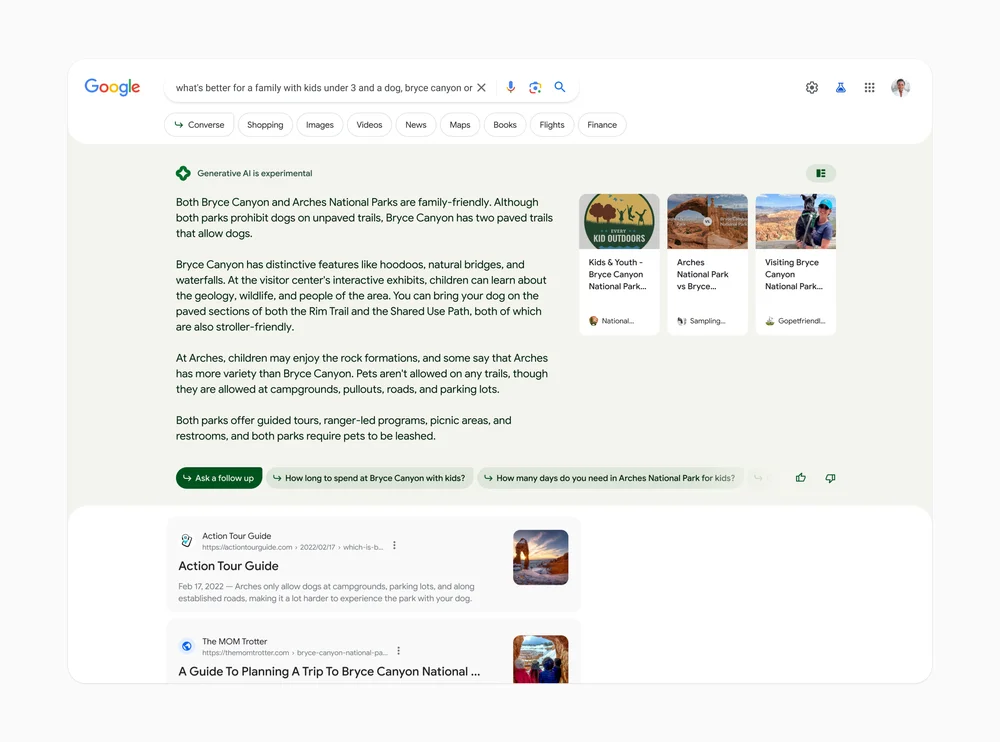
If you’re not seeing these new-look search results yet, check out this article from Google showing examples of what you can expect in the future.
What does this mean for SEO?
Well, I don’t believe it’s dead, that’s for sure, but I do see a change of strategy might be required for some website owners.
Strategy #1: Focus on providing value
This isn’t a new tactic, but if you’ve been ignoring it until now, it’s time to take action. The information Google is providing to the searcher in these expanded results offers genuine value, answering the searcher’s query with, not just text, but also images, video and related articles. Forget filler content and content for content’s sake, it’s time to be strategic about the content you create. Are you answering questions people are asking? Does your content provide true value? Is your content tailored to people who are ready to buy? Creating transactional content is one way to win at SGE as it’s more likely to result in a click through your website.
Strategy #2: Forget rankings
Interestingly, the information Google pulls into the top, AI generated section, doesn’t always come from the websites that rank in the top ten, so even if your website doesn’t rank highly now, it could still appear at the top of search results if it provides answers to the searcher’s query. This also means that where we used to aim for top 3/top 5 positions, we might not see a corresponding increase in traffic. We’ve always said it’s more important to focus on driving qualified traffic and measure this rather than rankings and it seems this will become more important with SGE.
Strategy #3: Check what format is ranking and produce something similar
Google’s AI is matching up the user’s search with what it believes will be the most helpful content in the most helpful format, so use this information to your advantage. If you notice that your target search queries generate a list-type result in the AI powered section, look at creating a listicle for that search query.
So, it’s not all new, but it’s definitely got to be more strategic if your website is going to win at SGE. If you’re already seeing SGE results, there’s no time to waste, so get your content strategy in order now. If you’re not yet seeing these AI powered results, don’t wait until you do! Be proactive and get creating content that will see you through this transition.