

Whether you own a bricks and mortar store and would like to start selling online, or you are a purely online business, you’ll want to make sure you maximise the traffic and sales generated through your ecommerce site. But with all the competition out there, and low barriers to entry, how do we stand out from the crowd and keep customers coming back for more?
In this article, I’ll talk you through five things you should be doing if you’re selling online.
#1: Focus on content
Let’s get the basics right. It’s tempting to get your online shop set up as quickly as possible and that could involve taking some shortcuts when it comes to uploading all the content to your website. Remember that it’s your website that customer will use to judge you and how trustworthy your site is (after all, you’re asking them to hand over their credit card details, so they need to feel confident in your company and your products).
- Ensure product descriptions are in-depth, useful and answer any frequently asked questions your customers may have about the product. Don’t be tempted just to copy and paste the manufacturer’s product description – search engines won’t like this and you’re not differentiating yourself from the competition.
- Images and product videos are key to helping your website visitors make the decision to purchase, so don’t scrimp on the visuals! Think about adding in lifestyle shots, close-ups and 360 videos.
- Do sweat the small stuff, and by that, I mean the pages on your site that you would typically associate with being the “small print” (Privacy Policy, Delivery and Returns Policy, etc). It’s important to be transparent and manage expectations when it comes to returns and delivery options, but also how you will use their data. If your small print seems a bit iffy, your customers will be off like a shot!
#2: Be everywhere!
You need a multi-channel approach to drive a decent volume of traffic to your website. It’s also a little risky to have all your eggs in one basket (especially as that basket is owned by a huge tech giant like Google or Facebook who could pull the plug at any time), so try to maintain a presence across all platforms where your customers hang out. So, consider:
- Social media sites – these are great for increasing awareness of your products and your brand, especially if your product is new in the marketplace. You can also use social media advertising to create targeted campaigns to reach your audience based on demographics and interests. Platforms that are more geared up for e-commerce are Facebook, Instagram and Pinterest.
- Search engines – and not just Google, but consider Bing as well. Both have “Shopping Ads” that you can use to showcase your products and ensure they come up in search results when your customers are ready to buy. We find Shopping Ads are cheaper and generate more sales than standard ads, so give them a go!
- Email marketing – keep in touch with your customers after a purchase with regular email updates. It’s much cheaper to retain customers than attract new ones, so leverage your current customer database, encourage repeat sales with special offers and cross sell relevant products they might be interested in.
#3: Be a stalker!
Remaretking works by targeting people who have been on your website before or interacted you’re your business in some way. We’ve all seen remarketing ads – those adverts that follow you around the internet after you’ve looked at a product on a website. And there’s a reason why advertisers do this – it works! We regularly see higher click through rates and higher conversion rates as we’re re-engaging an audience wo have already shown an interest.
Remarketing (or retargeting) can be done through most advertising platforms such as Google, Bing, Facebook, Twitter, Instagram, LinkedIn, plus other third-party advertising software. Here’s a few ideas of how you can use it:
- Target website visitors who have not made a purchase. Or you can even be more specific and target people who have placed items in the shopping basket, but not checked out, offering them an incentive to return.
- Target people dynamically, showing them the exact product they viewed on your website in the ad itself (known as Dynamic Remarketing).
- Upload your customer database (providing you have consent under GDPR), to target past customers with your advertising.
- Create “lookalike” or “similar” audiences where you create a new audience, mirroring the characteristics of your existing customer database.
#4: Get personal
Personalisation makes your customers feel valued, like they’re not just a number and helps to not only build a long term relationship with them, but will also improve your chances of repeat business. It doesn’t take long to personalise email messages using merge fields (availablein most email marketing software packages). Merge fields will automatically populate your emails with data from your customer list such as name, product purchased, date of sale, etc.
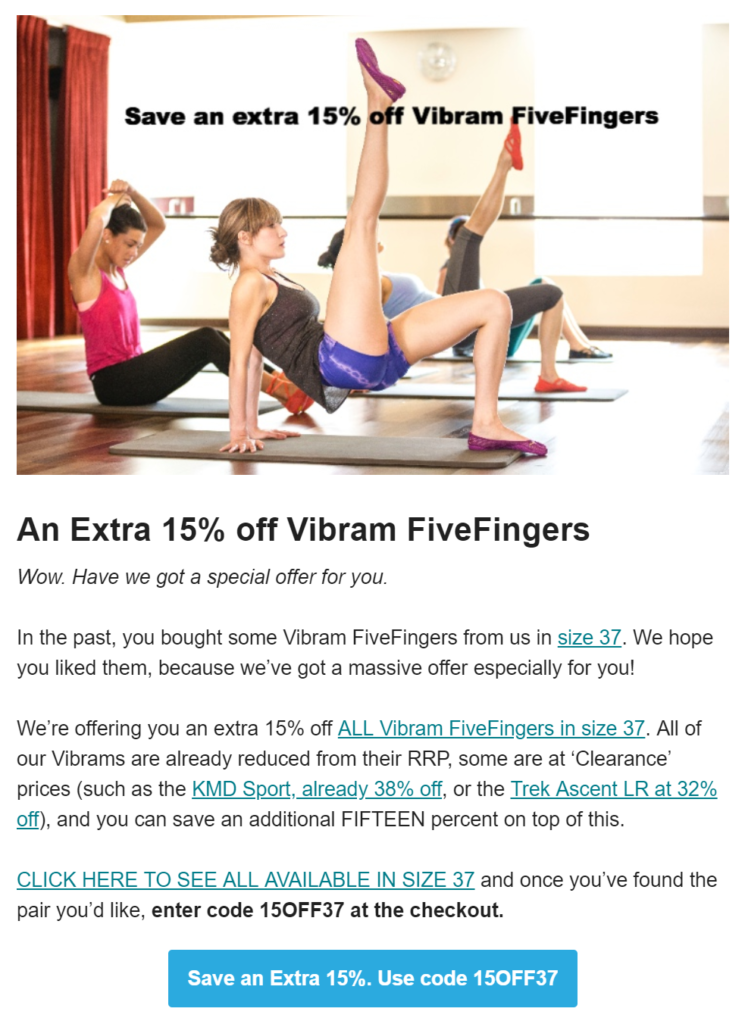
A great example here is from a small independent running shoe shop, who personalised their email with the brand of running shoes I usually purchase and the size I normally order. The button took me through to a page on their website that had already been filtered by brand and size, making the purchase really simple.
#5: Track everything!
If you are going to invest in advertising, you need to know where your sales are coming from so you can optimise campaigns and reassess how to allocate your budget. We recommend setting up E-commerce Tracking in Google Analytics which will show you how many transactions you have had and the revenue generated from each platform.
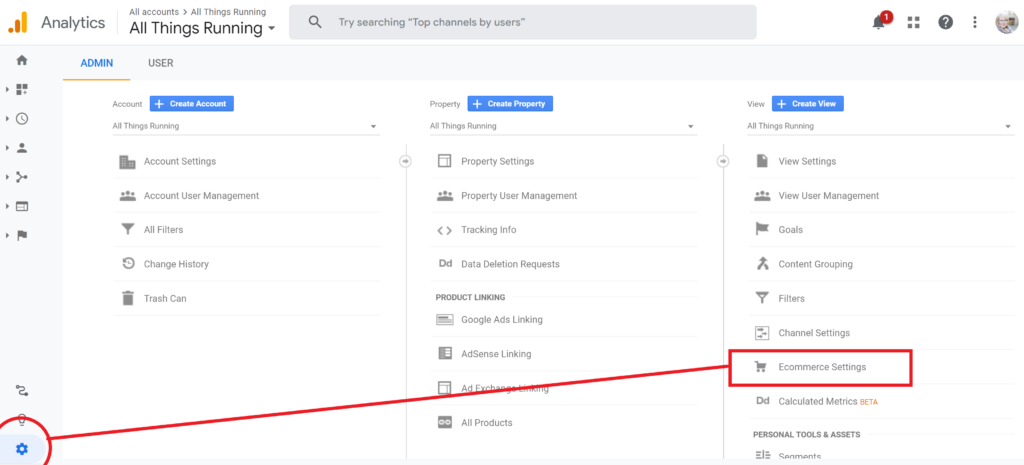
To set this up, ensure you have integrated Google Analytics with your website (the process for this will vary depending on your e-commerce platform of choice), then enable E-commerce tracking in Analytics under the Admin section, the View column and E-commerce Settings.
Conclusion
Growing your online sales can seem like a daunting task with multiple channels to manage, track and optimise on a regular basis, but providing the time and resources required are invested in promoting your website, you should see your sales increase over time.
If you require additional support to make this happen, get in touch and we would be happy to talk you through the options and the best way forward.
Leave a Reply