
Remember when getting an email was exciting? That little “ping” from your computer to say an email has landed in your inbox, or the reassuring tones of Joanna Lumley declaring “You have mail” (for those of you who remember AOL).
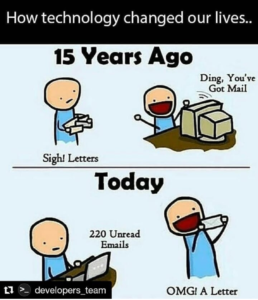 It’s a far cry from today when our inboxes are bulging with unread, unwanted emails and we know the only way to have a productive day in the office is to switch off the constant interruption that is those irritating email notifications, distracting us from our Facebook news feeds ;).
Things have certainly changed in the last 20 years, but email marketing remains a vital part of marketing for many businesses. Why? Because, when done well, it really works. And that’s the key – it must be done well with a clear strategy, plan and consistent execution to really reap the rewards (without p*ssing off your customers).
Email marketing isn’t dead, it’s just evolved
In the 15+ years of working in marketing, managing email campaigns and databases of over 100,000 recipients, we’ve learned a lot (sometimes the hard way). It’s no longer enough to just write some sales copy and mail it out to your entire database. Why? Because the chances of that email being relevant to everyone is very slim and the chances of it arriving at the right time are even slimmer, so in order to get the right message in front of the right people at the right time, we have to be more strategic.
Crafting content
Sales emails rarely get a great response, particularly in the B2B space. We just get so many of them, they often go unread, deleted or picked up by the spam filters. In order to get a better response, you need to be providing something of value.
Think about the emails you’ve signed up for in the past. Why did you sign up to them? Which ones kept you engaged and made you want to read the next instalment? I bet it wasn’t the ones selling toner cartridges and discounted LED lighting, right? For us, it’s the emails that teach us something, keep us informed as part of a wider community, or simply make us laugh. A good example is Parkrun – they send a weekly newsletter from the founder about the Parkrun global community with success stories and the latest news. For avid Parkrunners, this email plays a part in their commitment to the event and being a part of the Parkrun community.
Don’t think that by not hard-selling in every email, you’re somehow missing out on a sales opportunity. The opposite is actually true. For every hard-sell email you send they’ll be people who unsubscribe, block and delete your emails meaning you’ll miss out on selling to them again in the future.

Know your audience
It’s the lazy way to do email marketing – sending the same email to everyone. Unless you sell one product or service to a very niche audience, you’ll want to segment your list and be more targeted in your approach. For content to resonate with an audience, it has to be relevant.
The quality (and source) of your database plays a role here too. If your database is made up of people who have actively signed up for a particular newsletter or information about a particular service you offer, it’s much easier to take that information and segment them into key groups within your email marketing software. (See our previous post on ways to build your email list).
If your database is purchased, or you’ve just downloaded your LinkedIn connections, segmenting your list becomes much more difficult as you don’t know enough about the recipients in terms of their needs and interests, to be able to tailor your emails. Your challenge here is to use email to find out more about your audience and get to know them better. To do this, you’ll need to pay close attention to your reports to find out what they opened and what they clicked on.
Timing is everything
There’s lots of information out there about the best time to send emails, keeping B2B emails midweek and aiming for weekends and evenings for B2C emails. Much of it is common sense with the goal of sending your email at a time when your recipient is likely to be checking their email and their inbox is relatively empty (you don’t want your email to get lost in a sea of unread junk), but another element of timing is the frequency at which we send emails. How often is too often and how often is just not enough?
Well, let’s just say, it depends! For some industries, particularly B2C and e-commerce businesses, you can get away with emailing your database more frequently, say several times a week. That’s usually because you have lots of things to sell and lots of reasons to get in touch as well as your customers buying from you on a regular basis. For B2B emails, that might be overkill and run the risk of annoying your recipients, so think quality over quantity. A monthly or fortnightly round up of content may be better suited. But don’t take our word for it, try for yourself and pay close attention to your email open and click rates to see if sending more or less frequently affects your response rates and database size over time.
Let’s not bury email marketing just yet
Communicating with your audience via email, still plays a role in a successful marketing campaign, we just need to think beyond generic sales emails and provide something of value that people actually want to receive.
Leave a Reply